


An atmosphere of nervous excitement. Visible is the frosty air exhaled by my fellow runners as they execute the "about to run" wiggle on the starting line.
A rapid twitch of the hips.
I'm at my local 5km community parkrun and I'm focused. The countdown begins...
Oh, hang on. I need to adjust my watch. So does the person alongside me.
The person waiting expresses impatience. I won't start until… yes! Signal acquired, and I'm running.
Amidst the crowd, it's challenging to find a wrist without a smartwatch on it. And it's not just us participants who use them.
This is a thriving, multi-billion pound market. Companies like Samsung Galaxy lead the market, featuring an wide selection of different devices to cater to a variety of needs. Depending on how high tech the device you go for, prices can start from an affordable sum to a small fortune.
"I find it infuriating, it's impossible to switch off."
"It comforts me… It feels like a supporter encouraging me."
"Stop telling me about a restless night."
A handful of the comments people have shared from other device users when I ask what they feel about theirs.
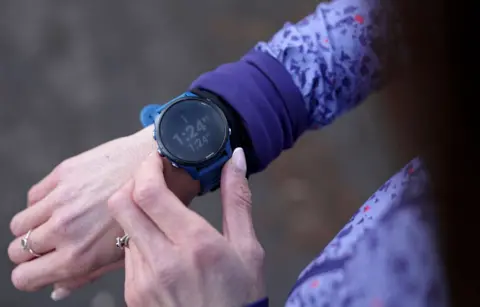
A Sea of Statistics
My current opinion on my own device? At this moment, irritating. It's indicating I'm off pace, leading me to doubt whether the foliage I'm passing under are blocking my GPS connection.
Countless individuals of us fasten these small devices onto our arms and keep them on all day and night, ostensibly unconcerned with the fact they're continuously tracking us.
Long past are the days when we relied on them solely to give us an rough count of our pedometer reading. Now, they can analyse our sleep quality, heart rate, oxygen saturation, our body battery.
It's a challenge to find a health indicator they don't track.
But are they able to do what they advertise? And are the numbers we obsess over a accurate representation of the truth? Do they enhance our overall health, or do the avalanche of metrics and constant notifications just increase our daily stresses?

A Love-Hate Relationship
"I do get a quite preoccupied with mine," one user confesses.
While she appreciates how her device monitors her exercise, she finds some of its other functions "excessive" at times - a feeling first discovered during a significant period.
Before she realised she could adjust the settings, her smartwatch constantly alerted her she was not being productive enough. In a new phase, the watch frequently reports her she's had a poor sleep score.
"I've got a six-month old, I don't need to be told I'm tired," she says. "I'm acutely aware perfectly well."
Couldn't she just stop wearing it?
"It's possible, theoretically, but I'm in this push-pull dynamic with it," she explains. "I value it for its exercise data, I just wonder whether the additional features it can now do is possibly excessive for me."
How Do They Work?
Different brands of smartwatch has its own unique way of measuring your health metrics and processing your data, but the most use optical sensors on the underside of the watch.
They usually emit minute LED lights onto your wrist which can monitor pulsation, recording your pulse rate. More advanced devices detect changes in the bioimpedance that runs through the skin to get an idea of your recovery state.
The Professional Viewpoint
One expert says that in general for smartwatches, it's a "delicate equilibrium" - while the continuously improving tech could realistically save lives, "spotting abnormalities before we show symptoms", it could also turn us watch wearers into the "concerned but fine".
He points out that newer wearables can carry out tests like heart rhythm analysis, which regularly monitor how stable the heart is. They can alert if someone is experiencing a heart arrhythmia, where there is erratic signals in the heart causing an uneven pulse.
This does not automatically signal someone is on the verge of a cardiac event, but it can give an early warning they might be more susceptible of a stroke in the years to come.
But how to interpret these readings is not straightforward. The expert concerns that as further capabilities are introduced, people may struggle to fully comprehend their data.
"I have some doubts that having the capacity to monitor so many metrics is such a beneficial thing," he says.
A professor specialising in wearable tech agrees. Her work into the effect of wearable tech on a cohort of heart condition patients suggested a significant portion of those who were given devices to monitor their cardiac function experienced increased anxiety and were "had a higher tendency to use medical services".
She observed a cycle with her patients - they saw a alarming metric on their watch. They grew concerned. Their heart rate increased. They got more worried. They re-examined the data, and their anxiety went up again.
"Upon viewing numbers about ourselves that we don't really understand then, of course, we are going to become concerned," the psychologist says. "We monitor, we re-check - it becomes a feedback loop."


